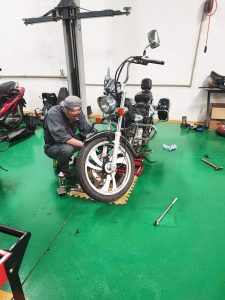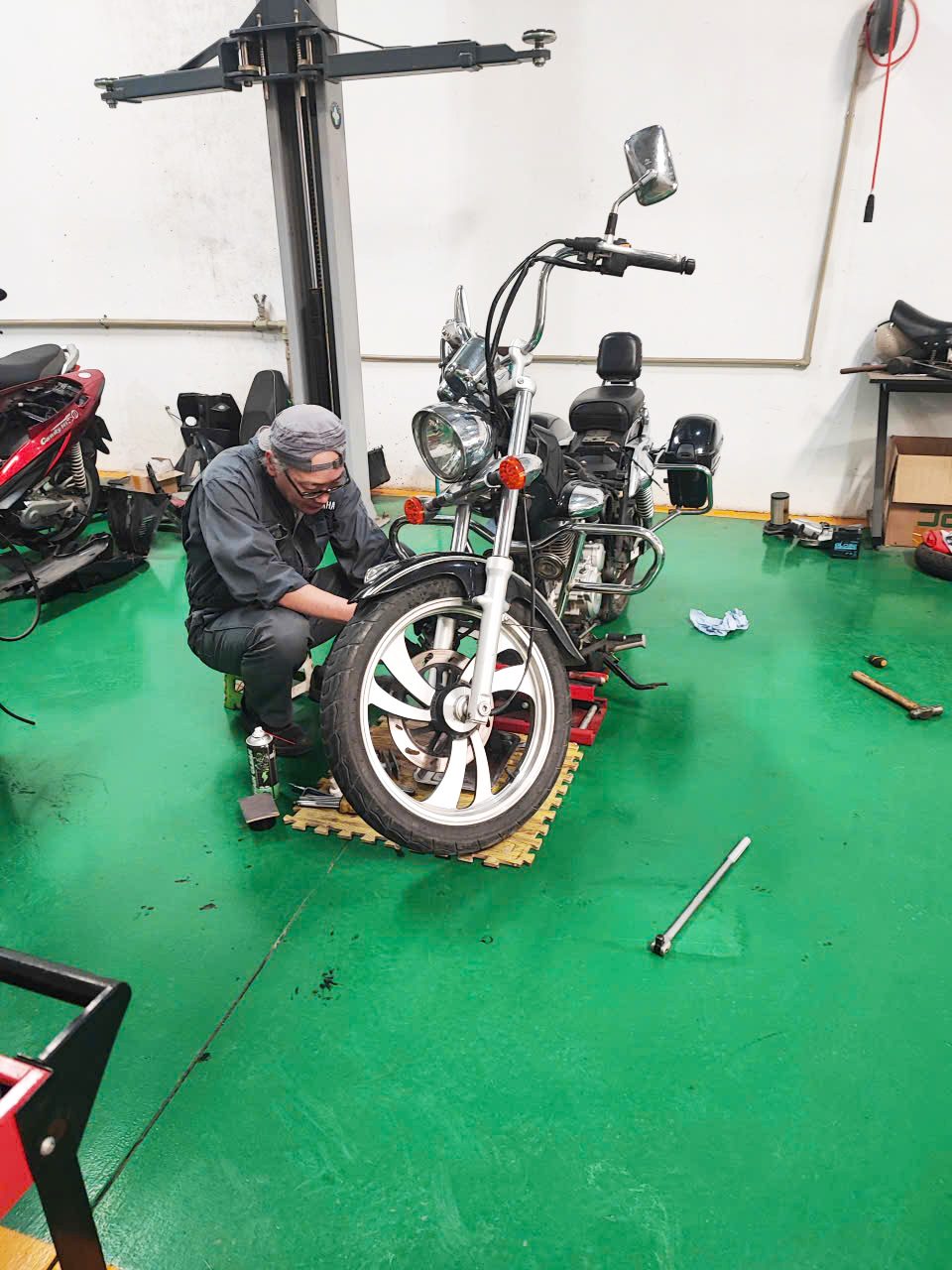
In a corner of the maintenance workshop area in Hanoi, there is a factory where vehicles are calmly and precisely handled. It is Yamada Factory 105. The Japanese mechanic, Katsuyuki Onitsuka, is the one who supports the work here. His career as a mechanic spans 39 years. Despite moving from Japan to Southeast Asia, he has consistently continued to provide “maintenance that identifies the cause.”
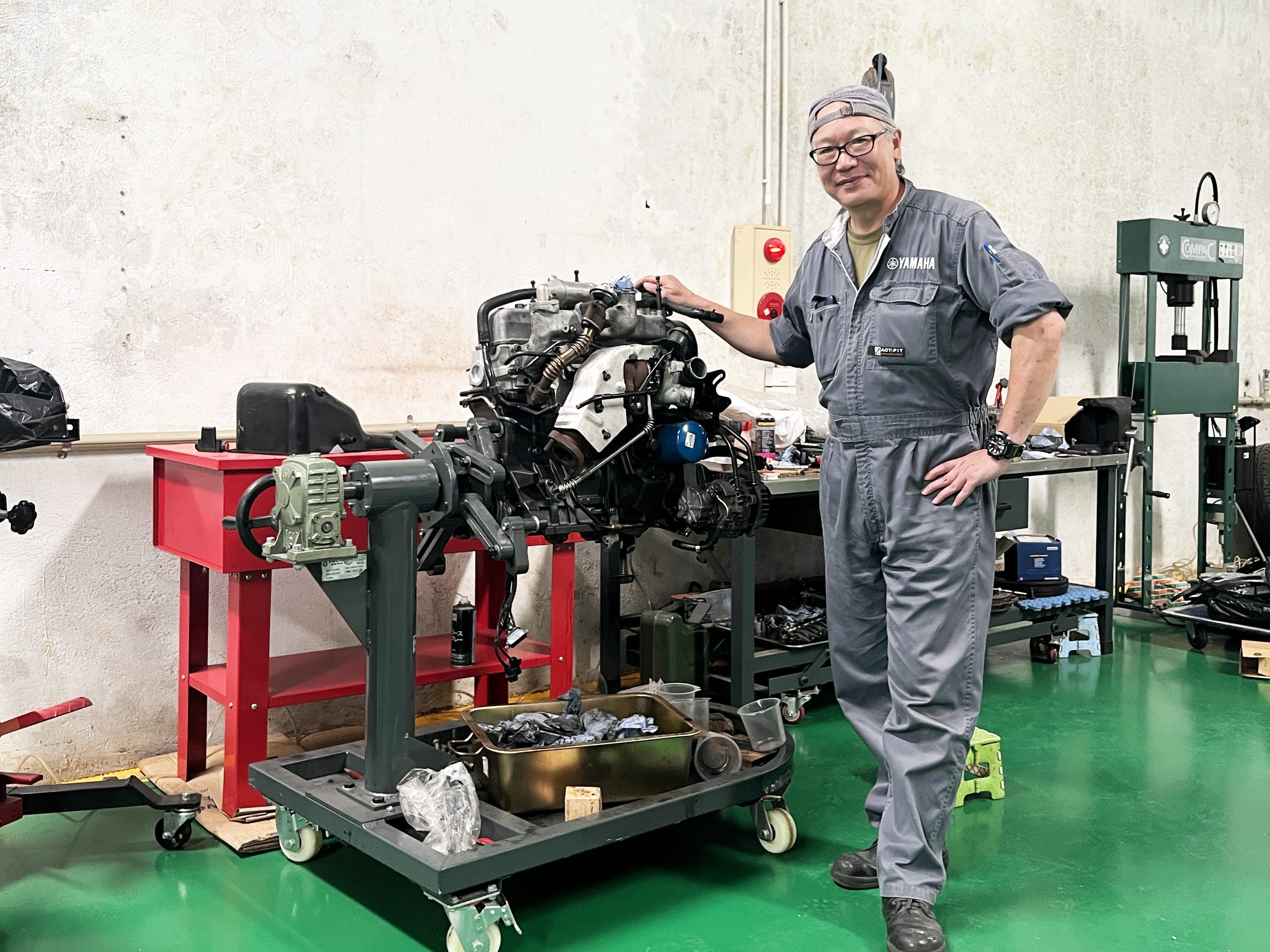
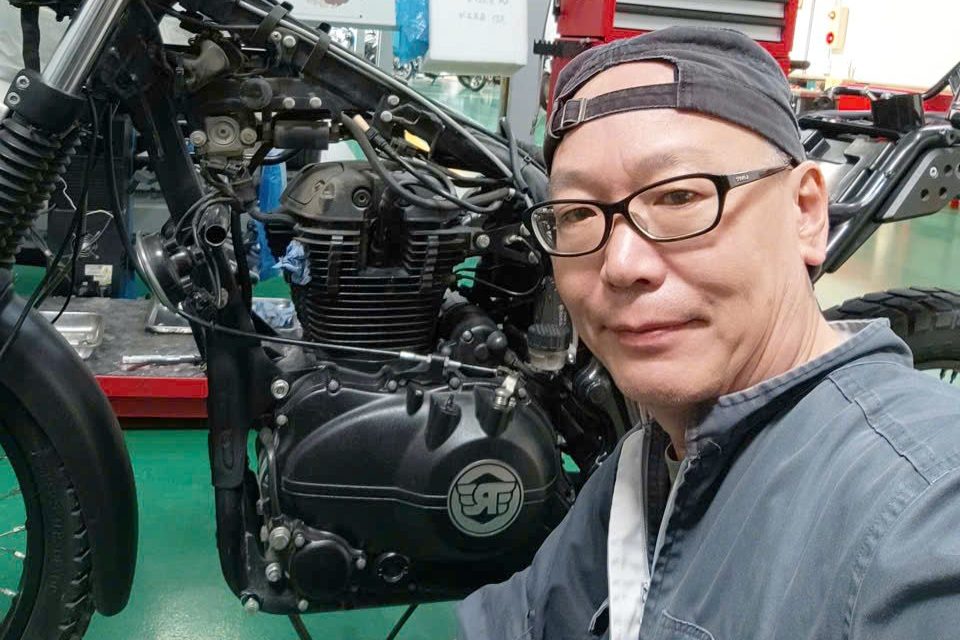
Katsujiro Yukata Onizuka Katsuhisa
Born on April 14, 1966 in Asakura City, Fukuoka Prefecture. He studied automotive maintenance at the Kyushu Kokuritsu Technical School of Industry in 1987, and began working at Kyushu Mitsubishi Auto Sales the same year. He gained experience in the country. In 2012, he moved to Myanmar and participated in an airport vehicle maintenance project. He was involved in building the vehicle maintenance system at Mandalay International Airport and providing local technical support. Currently, he is responsible for maintenance work on motorcycles and vehicles at Yamada Factory 105 in Hanoi, Vietnam. As a veteran mechanic with experience working overseas, he continues to be at the forefront of his field.
The foundation built in Japan
The starting point of my career is Japan. In 1987, I studied automotive maintenance at the Kyushu Kure Technical School of Industry, and from that year onwards I worked at Kyushu Mitsubishi Auto Sales, gaining experience on the job.
It was a time when I gained experience in the maintenance field, focusing primarily on Japanese cars, in terms of basic skills and on how to handle the field.
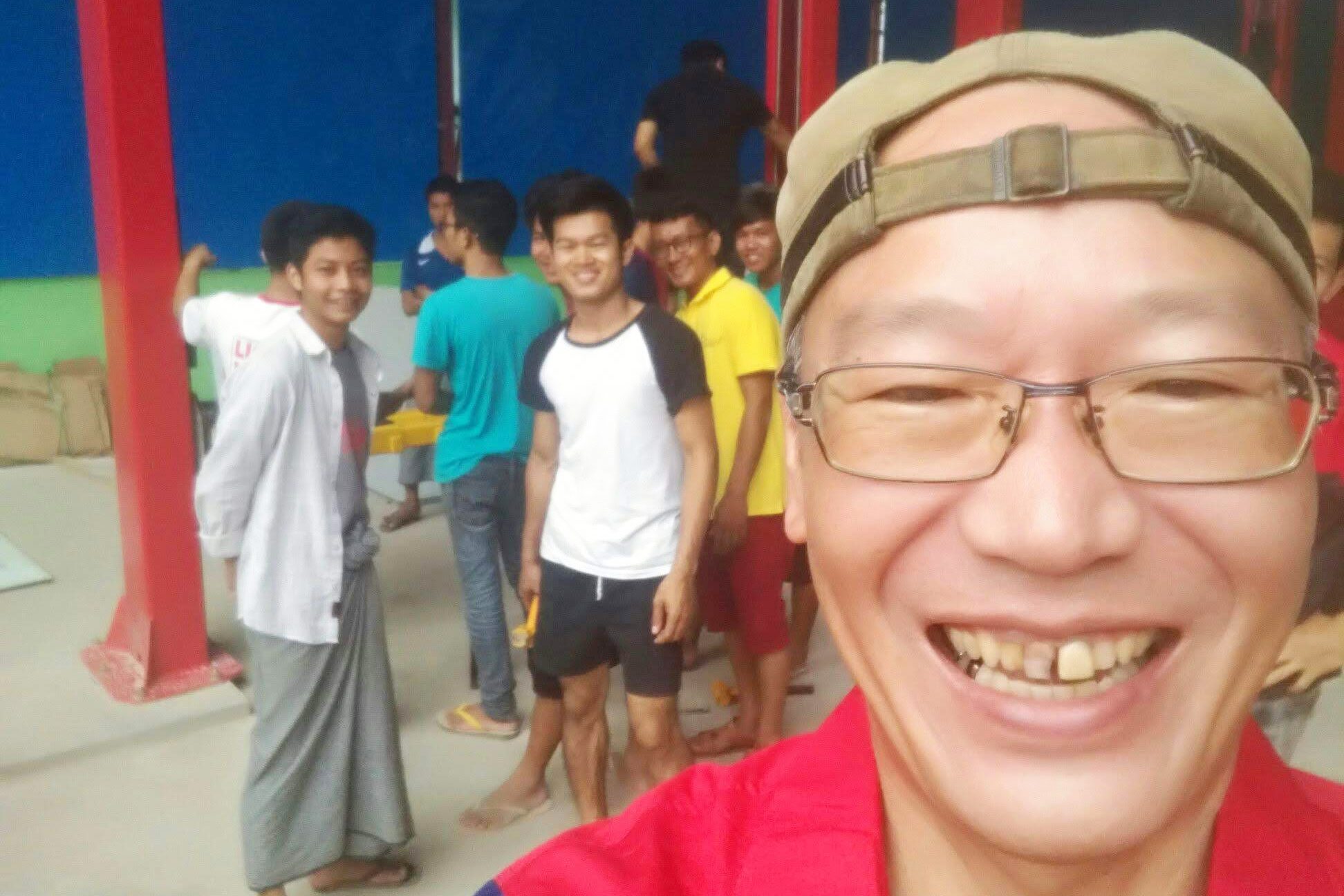
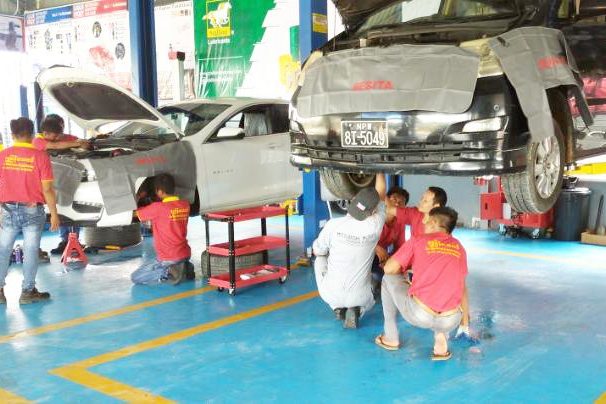
Scenes of instructing local mechanics at the maintenance facility in Neepido. Even if the language is not sufficient, the techniques are conveyed through the work itself.
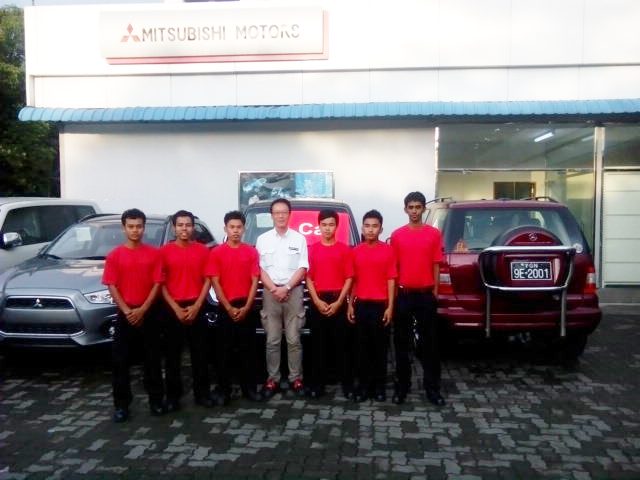
A commemorative photo taken in front of Mitsubishi Motors Myanmar. There are still mechanics active there today, and the connections from that time continue.
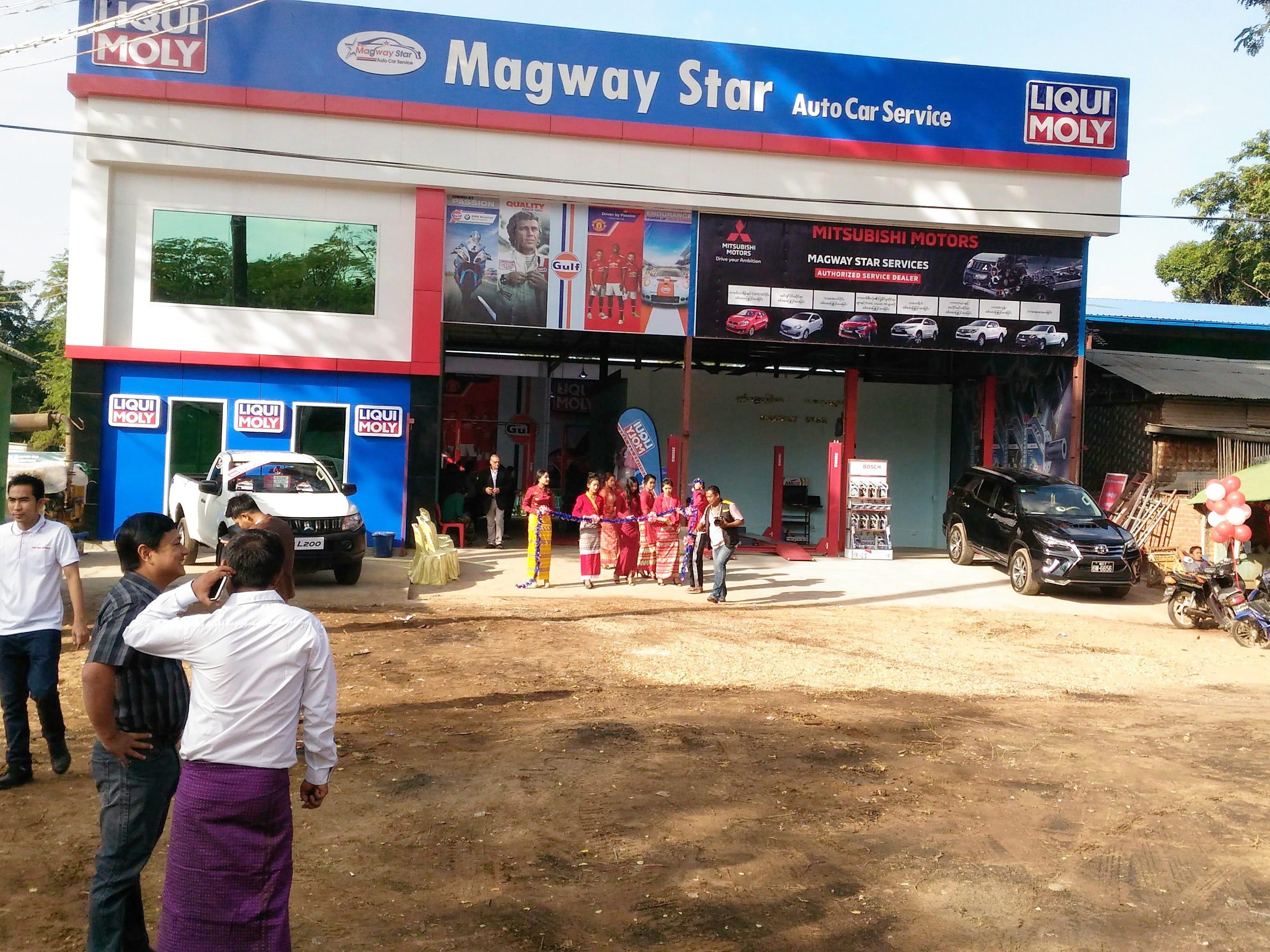
Scenes from the event commemorating the completion of the Maguestar Maintenance Plant, which serves as a vehicle maintenance base
Challenges and turning points in Yangon
The turning point in my career was my challenge to Southeast Asia. My first base was in Yangon, Myanmar. There, I worked on the launch of a maintenance plant under First Transport Industry Co., Ltd., and began building a business in a new environment.
My experience in Japan has been a big asset in this field support in Yangon. Originally, I gained knowledge working in the maintenance department of a Mitsubishi Motors dealership in Japan, which led to opportunities to serve as a technical advisor at the local Mitsubishi Motors dealership. I also play a role in bridging the gap between Japanese and local standards by conducting inspections of maintenance quality and operational aspects.
This experience in Yangon was not just about technical support; it was an important period that led to the next project.
Creating a site at Mandaraya International Airport
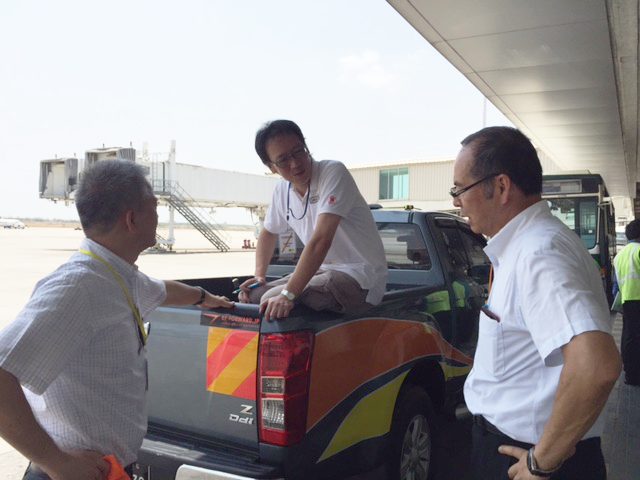
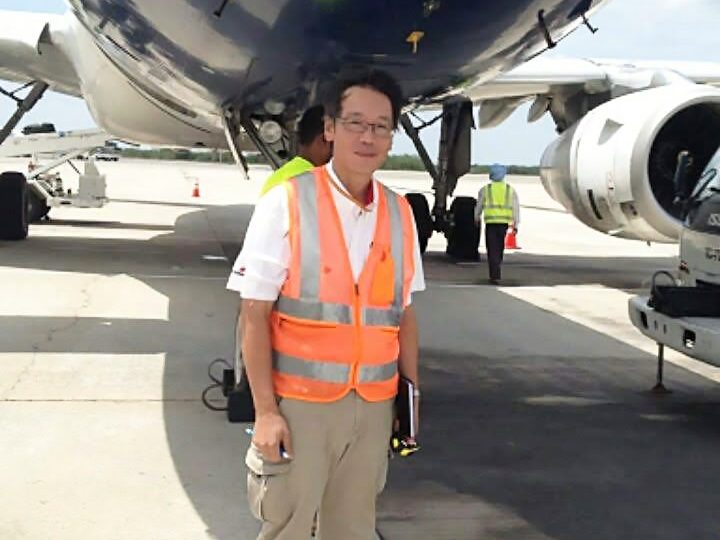
In this context, the project evolved into an airport management project in Myanmar, and involves supporting the maintenance and operation of vehicles at Mandalay International Airport.
This project was promoted by the MJAS, a management company established under a consortium of JALUX, Mitsubishi Corporation, and local corporate groups, and was carried out in a manner that involved handling practical matters related to airport operations such as maintaining and managing airport facilities and maintaining vehicles.
In this project, in addition to maintaining the baggage cars and support vehicles used within the airport, we were also involved in setting up the maintenance facility itself. This was a start from a state of incomplete equipment, and it was not just maintenance; it was also a “work of creating a system.”
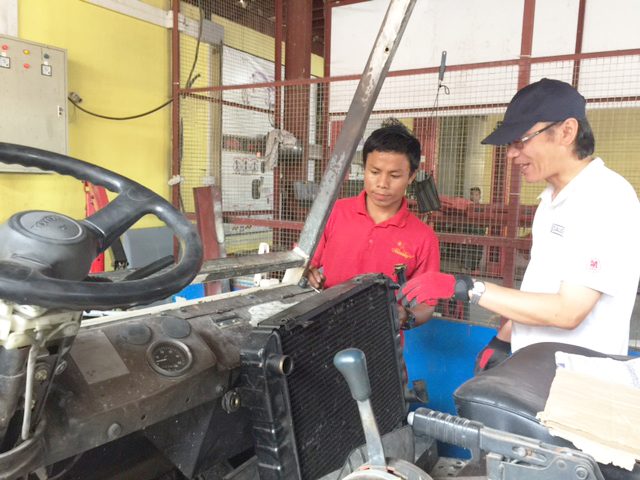
The focus was on building relationships with the local mechanics. Instead of imposing standards brought from Japan unilaterally, we will convey the technology through actual maintenance work while sharing why that work is necessary. By checking each component individually during disassembly, inspection, and assembly, we aimed to make the local staff capable of operating the equipment on their own.
Amid shortages of parts and environmental constraints, we are working to establish operations while also restoring and machining vehicles locally. One of the aspects we have consistently emphasized is the determination to find the root cause of why a part broke. Instead of simply replacing the part, we investigate the cause and prevent recurrence. This approach is gradually permeating the entire site.
On the other hand, due to political turmoil and the impact of the coronavirus pandemic, there have been times when airport operations were restricted, and the role of the field itself has also changed.
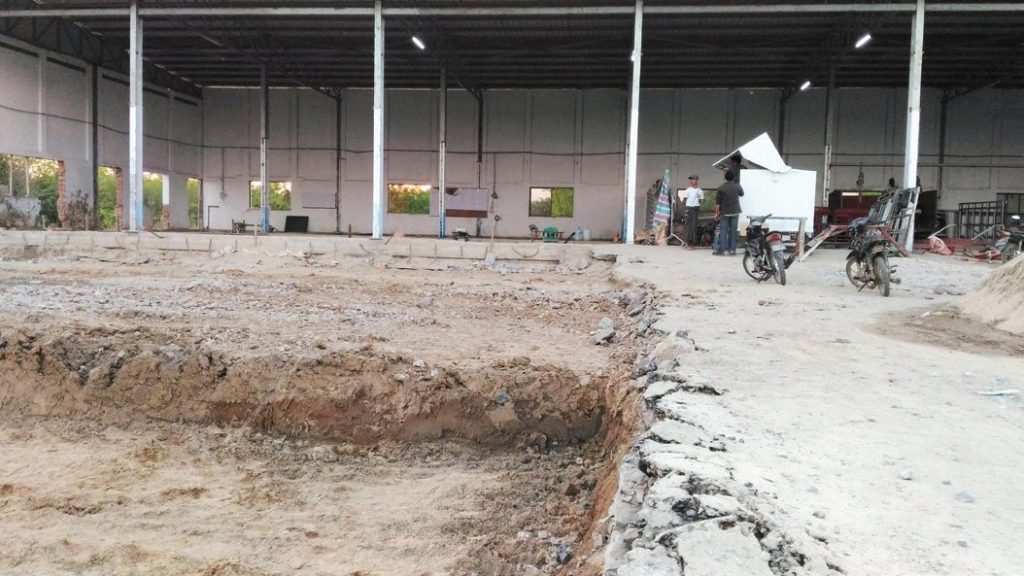
The foundation work was carried out under the technical cooperation of Japanese companies to withstand heavy machinery and vehicles.
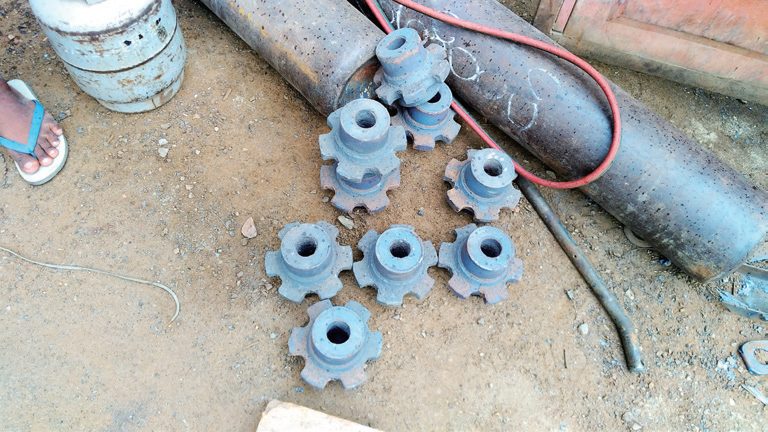
Difficult-to-obtain parts were cast and manufactured locally, and the vehicle was maintained while creating the necessary parts from scratch.
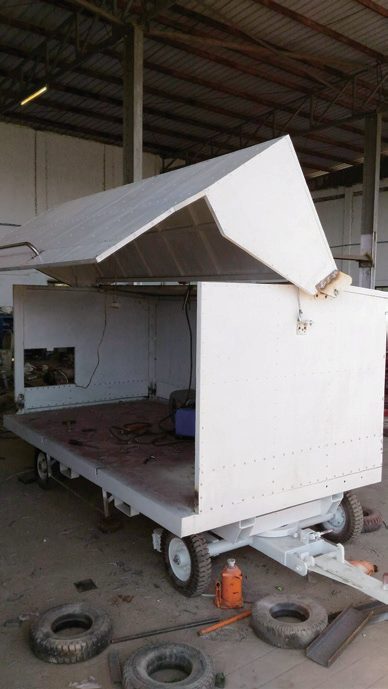
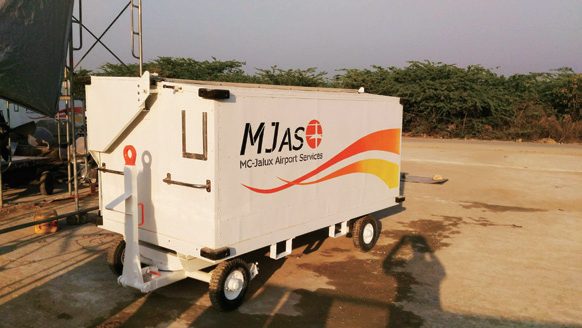
A luggage cart that was manufactured from scratch, assembled, and completed.
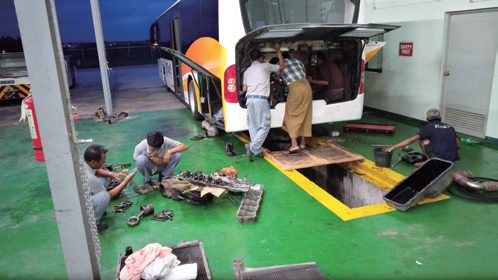
The scene of local technicians repairing the airport bus that connects the plane to the terminal.
New challenges in Hanoi
In 2024, the activities will move to Hanoi, Vietnam. Currently, at Yamada Factory 105, we are working to establish a foundation for the field by standardizing maintenance quality, visualizing work processes, and creating a system for customer management.
Here too, the key is the relationship with the local mechanics. Rather than teaching them techniques, we emphasize the importance of standing side by side in the same location and sharing the standards of work. We emphasize understanding the meaning of the work and being able to reproduce it.
Regarding the maintenance work, Mr. Onizuka says that he is not doing anything special. He says the important thing is to focus on how accurately he can orient himself towards the vehicle in front of him.
He has been a mechanic for 39 years. He is now in his 40th year, and despite the changes in the country and the environment, he continues to be on the job, maintaining the same standards that have never changed.
On days when they have no work, they often enjoy watching anime at home. They especially like revisiting works from the 80s, and recently have become drawn to works with unrealistic worldviews such as those of alternate universes. Their time spent with a drink also serves as a way to switch gears and move on to the next project.
In the long run, we are also considering expanding to the entire Southeast Asian region, aiming to build a system that can be extended to other countries, including Laos, Cambodia, and Myanmar.
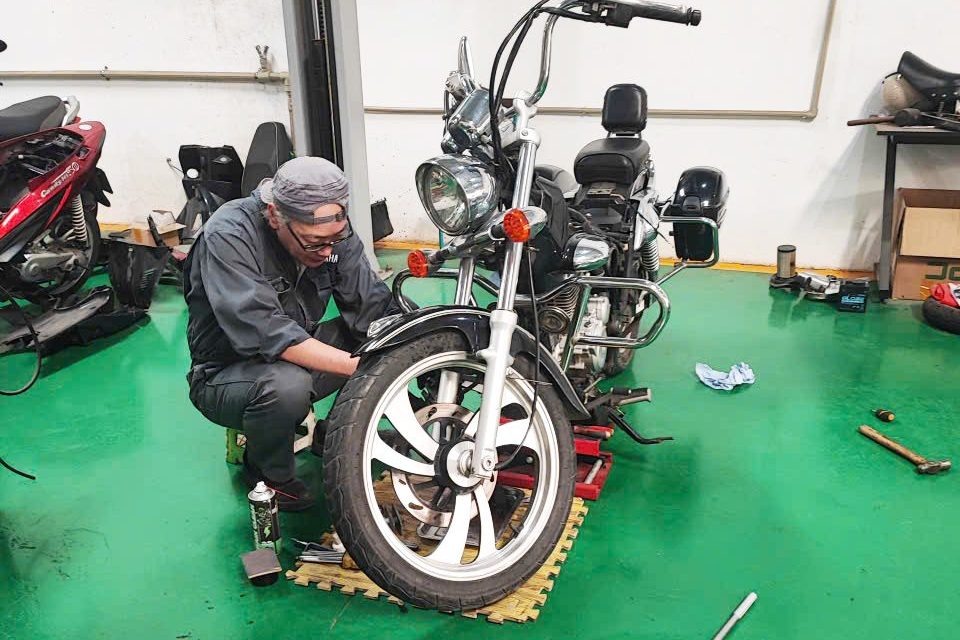
The process of servicing a motorcycle. "There's nothing I don't know about used cars in Japan," says Mr. Gionokura.
SNS



Yamada Factory 105 / Yamada Factory 105
Address: 486 Phuc Dien, Xuan Phuong, Nam Tu Liem, Hanoi
Phone: 028-7300-3702
HP:https://yamadafactory105.bike
FB: Yamada Factory105J
IG:yamadafactory105_j