It’s the height of summer in Japan, and it’s been hot all day long. Meanwhile, in Hanoi, where there are four distinct seasons, it’s the time to say goodbye to summer and enter autumn starting in August. In the past, it was said that the temperature gradually dropped and became cooler, but that’s also the case now. The hot days will continue for a while yet. This time, we’ll talk about the heat in Vietnam.
Was it cool in the past?
In the northern and central parts of Vietnam, it is not uncommon for days to reach 40 degrees Celsius during the peak summer months. While Southeast Asia experiences summer temperatures like that, it used to be unusual for temperatures to reach that level. However, they say that 20 to 30 years ago, temperatures didn’t reach that level. Although it is hot during the day, it is relatively comfortable as dusk approaches, and you can also seek relief from the pleasant night breeze. I think that even people born in the Showa era in Japan can recognize that the summer of that era and the current summer are clearly different. Many Vietnamese people seem to have similar feelings as well.
It can be said that the fact that it is not is the biggest reason.
Economic development seen from weather forecasts
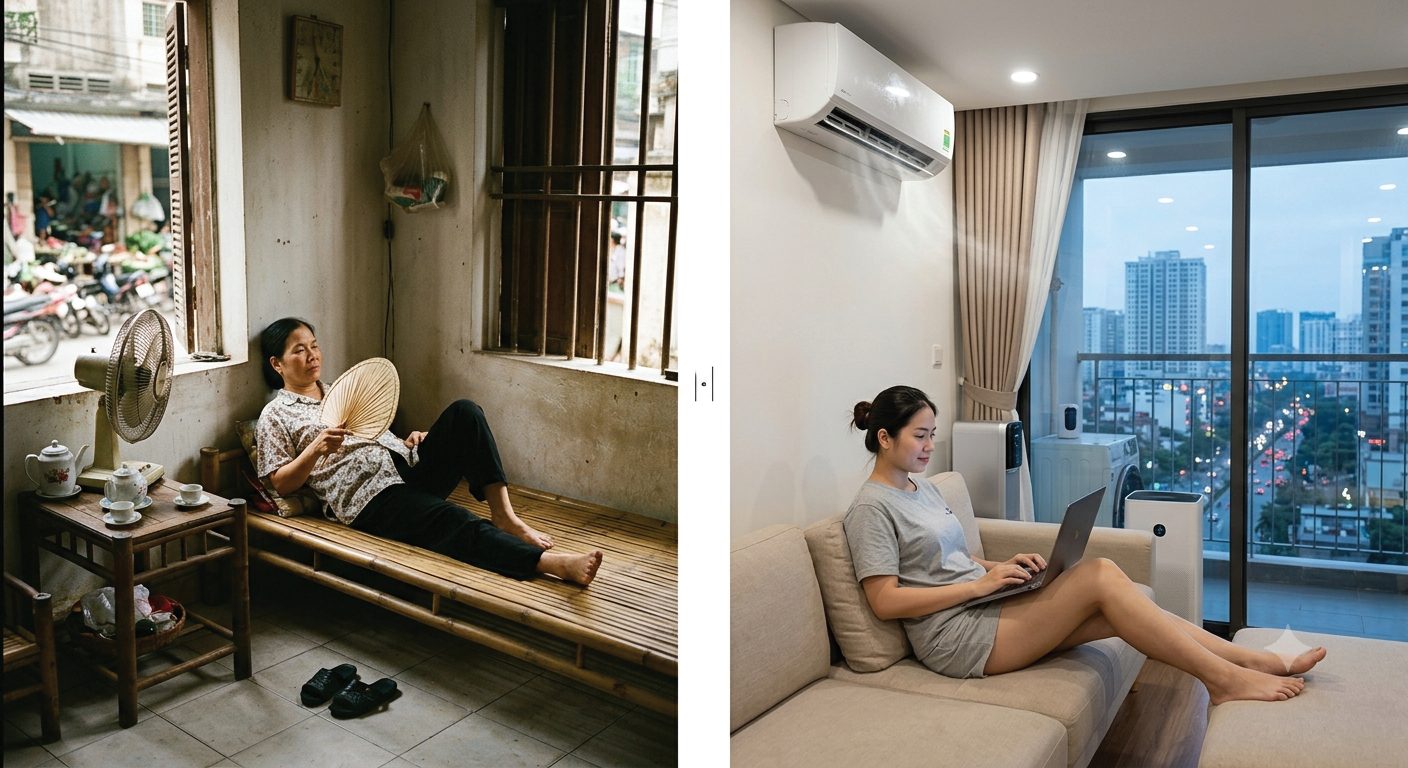
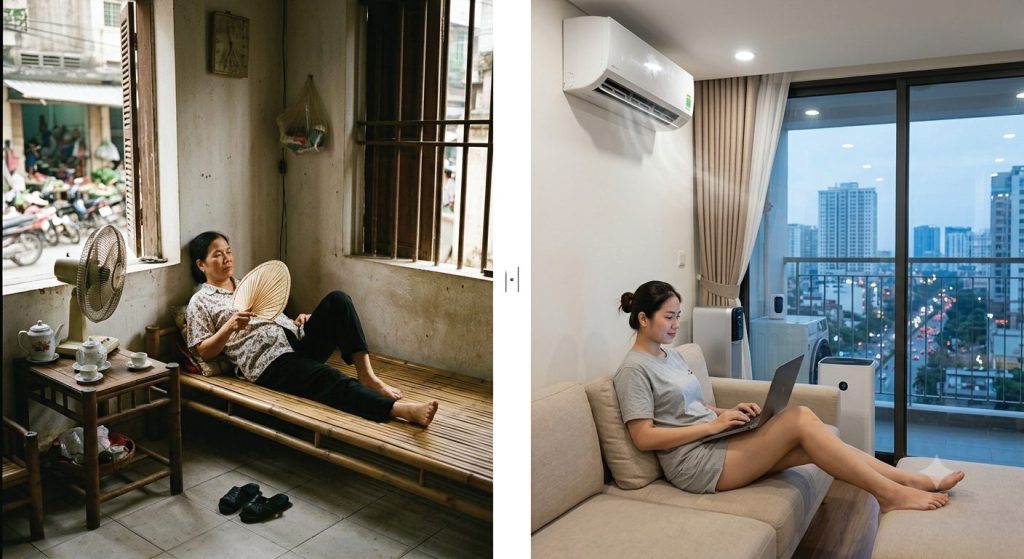
When looking at local weather forecasts, on days when the temperature rises in the summer, we often hear things like “Please refrain from going out as much as possible during the day” or “Please adjust the room temperature properly with the air conditioner.” However, I remember that about ten years ago there was no talk of “with the air conditioner.” That’s because back then it wasn’t common for every house to have an air conditioner, and even if it did, most households only used it for special occasions, such as when guests came over. When I hear talk about heat control measures based on the assumption that air conditioners are available in every home, I get a sense of how society has evolved.
Impact on the event
Vietnam has gotten hotter than in the past, but it seems that changes in outdoor events are not that significant at this time. In the past, Japan was hot enough even during the summer to hold outdoor events, so while there have been revisions to the timing and content of events like summer festivals, Koshien, and athletic competitions, Vietnam is originally hot in the summer and has traditionally tended to avoid daytime events during this time. It seems that the impact on outdoor workers is stronger, and there are more calls for heat prevention measures for construction workers and agricultural workers than in the past.
Nowadays, it’s common for commercial facilities and restaurants to have air conditioning, and the spread of air conditioning in households has advanced considerably. However, personally, I’m deeply attached to the idea that it’s a luxury to turn on the air conditioning all day long at home, so I still spend the day with a fan on during the day.
author (usu. of a particular book, etc.)
Takuma Inada
Social Security Actuary of Japan
Representative of SESSA VIETNAM CO.
Profile
Having been involved in human resources and personnel affairs in Vietnam for more than 10 years, he currently runs SESSA VIETNAM, which he started on his own. The company provides personnel consulting services mainly in the fields of human resource recruitment, personnel affairs consultation, and labor permit application handling. He spends his days observing Vietnamese people on a daily basis, and it has become his daily routine to think about the “why and what” of Vietnam. While raising his Vietnamese wife and two children, he is constantly striving to provide bilingual education in Vietnamese and English.
Official HP】 【Official HPhttps://www.sessa-jp.com