Many foreign dramas and anime are broadcast on Vietnamese television programs. While there are subtitles and dubbed versions, the process is not different from Japan; however, there are some differences in the dubbed broadcasts. In this article, I will discuss Vietnamese dubbed broadcasts.
There are many one-man voice actor voiceover broadcasts
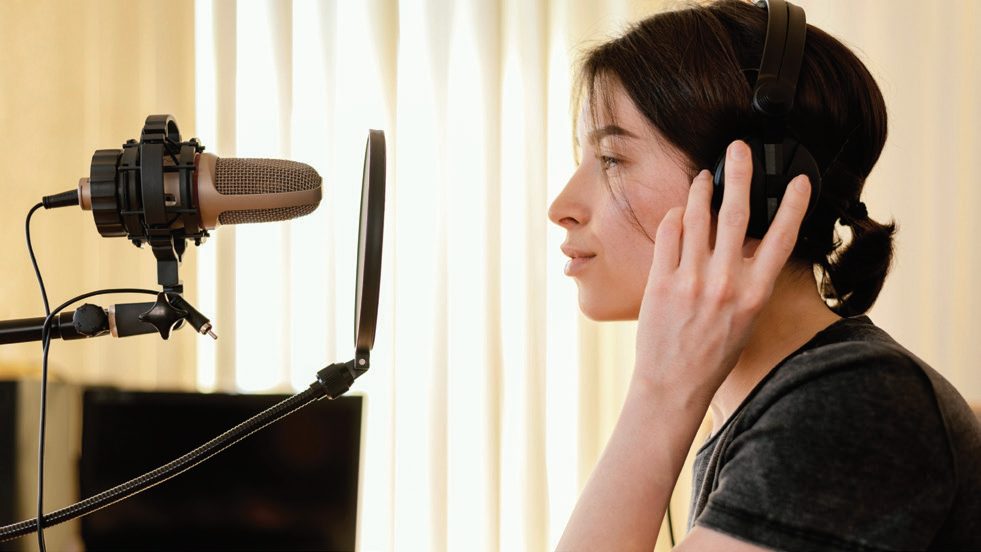
The big difference between the Japanese dubbing broadcast and the American one is that there are many shows where the voice actors dub all the roles themselves. I’ve seen in black-and-white era movies that in Japan, a single voice actor could do all the roles; nowadays, that no longer happens. Even in scenes where many characters appear, everyone speaks the same voice, so it’s often hard to tell who’s speaking. However, I admire the work he does as he quickly dubs the voices of all the characters one after another.
Why do you do it alone?
It seems that budget is a major factor. When trying to broadcast with limited resources, it is said that it is financially difficult to employ voice actors based on the number of characters. Also, due to these circumstances, there are also fewer voice actors, so for many viewers, dubbed voices are usually the voices of familiar, established actors. Currently, there are few opportunities to focus on the profession of voice actors, and since they are the only ones to perform the voices for each character, there is no opportunity to focus on the individual characteristics of the voice actors, such as “this character is voiced by this actor.”
Stilted speech
The lines are basically read out of the script. From a position accustomed to Japanese voice actors, it may sound bland. However, some Vietnamese people say that the spoken version is more likely to convey the meaning than the literal reading. Additionally, since the voice actors have to perform all the roles themselves, it may be difficult to convey emotion in all the lines realistically. Incidentally, in Vietnamese dubbing broadcasts, it is customary to leave the original language audio below the dubbed audio. The emotional aspects of the characters are read from the native accent, and the dubbed audio allows the audience to understand the specific meaning through this method of enjoyment.
When it comes to voice actors, they are not only used for dubbing in movies and dramas, but also in anime. However, voice actors in anime are not particularly sought after either. There is no such thing as so-called “anime voices” like those of Japanese anime voice actors, and it seems that acting ability is not particularly emphasized. In the past, the Vietnamese society where manga and anime were primarily watched by children also has changed a bit as the generation has grown up. There is still plenty of room for growth in Vietnamese anime, so it is likely that the profession of voice actor will also develop in line with this.
author (usu. of a particular book, etc.)
Takuma Inada
Social Security Actuary of Japan
Representative of SESSA VIETNAM CO.
Profile
Having been involved in human resources and personnel affairs in Vietnam for more than 10 years, he currently runs SESSA VIETNAM, which he started on his own. The company provides personnel consulting services mainly in the fields of human resource recruitment, personnel affairs consultation, and labor permit application handling. He spends his days observing Vietnamese people on a daily basis, and it has become his daily routine to think about the “why and what” of Vietnam. While raising his Vietnamese wife and two children, he is constantly striving to provide bilingual education in Vietnamese and English.
Official HP】 【Official HPhttps://www.sessa-jp.com